https://www.franceinfo.fr/replay-radio/ ... 15524.htmlL’aluminium, autre victime collatérale de la guerre au Moyen-Orient
Franceinfo 05 mars 2026
Depuis le début du conflit avec l'Iran, on parle beaucoup des difficultés d’approvisionnement du pétrole et du gaz. Mais d’autres matières premières sont aussi touchées par le blocage du détroit d’Ormuz, notamment l’aluminium, très précieux pour l’industrie.
On retrouve l’aluminium dans la fabrication de plein d’articles dont nous nous servons au quotidien : de la feuille d’emballage alimentaire et des cannettes de jus de fruits jusqu’aux pièces d’avions en passant par les ustensiles de cuisine… Pratiquement toutes les industries dans le monde ont besoin de ce composé chimique, métal malléable, troisième élément le plus abondant sur la planète après l’oxygène et le silicium. Le couloir maritime entre le golfe Persique et l’océan Indien qui ouvre vers le reste du monde est tout aussi important pour le marché de l’aluminium que celui des hydrocarbures.
La région est connue pour son énergie bon marché : il y a tout ce qu’il faut de pétrole et de gaz pour faire tourner l’industrie locale à moindre coût, notamment les très énergivores fonderies de métal léger comme ce fameux aluminium. Émirats arabes unis en tête, les pays du Golfe produisent ainsi presque 10% de l’aluminium mondial et en assure 15% des exportations au niveau de la planète.
L'automobile et le bâtiment parmi les industries menacées
Le blocage logistique aura des effets en chaîne très rapidement car, quels que soient les pays clients, généralement les fonderies ont à peine un mois de stocks d’alumine, la matière transformée et livrée ensuite à l’industrie. Qui dit moins d’aluminium vendu, dit une industrie automobile à la peine et dont elle se passerait bien en ce moment. Le bâtiment serait également touché : les fenêtres et portes de maisons sont composées d’aluminium en dessous du PVC, etc.
La tonne d’aluminium vient de passer en quelques jours de 3 000 à 3 300 dollars. C’est un plus haut depuis 2022, et ce n’est pas terminé. Le vrai paramètre aujourd’hui n’est pas l’intensité de la guerre mais sa durée dans le temps.
Aluminium (Alumine et Bauxite)
Modérateurs : Rod, Modérateurs
-
energy_isere

- Modérateur

- Messages : 103703
- Inscription : 24 avr. 2005, 21:26
- Localisation : Les JO de 68, c'était la
- Contact :
Re: Aluminium (Alumine et Bauxite)
-
energy_isere
- Modérateur
- Messages : 103703
- Inscription : 24 avr. 2005, 21:26
- Localisation : Les JO de 68, c'était la
- Contact :
Re: Aluminium (et Bauxite)
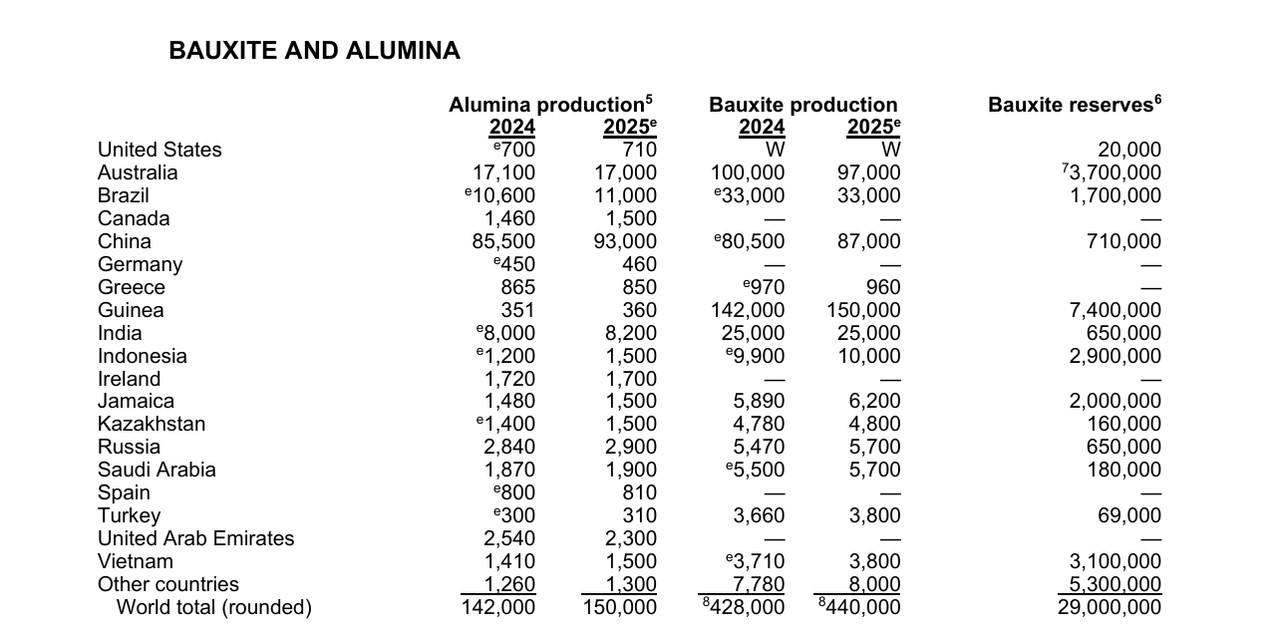
La derniére fiche USGS pour la Bauxite : https://pubs.usgs.gov/periodicals/mcs20 ... lumina.pdf
Data in thousand metric dry tons
mon post de l' an dernier : http://www.oleocene.org/phpBB3/viewtopi ... 6#p2408346
Data in thousand metric dry tons
mon post de l' an dernier : http://www.oleocene.org/phpBB3/viewtopi ... 6#p2408346
-
energy_isere
- Modérateur
- Messages : 103703
- Inscription : 24 avr. 2005, 21:26
- Localisation : Les JO de 68, c'était la
- Contact :
Re: Aluminium (et Bauxite)
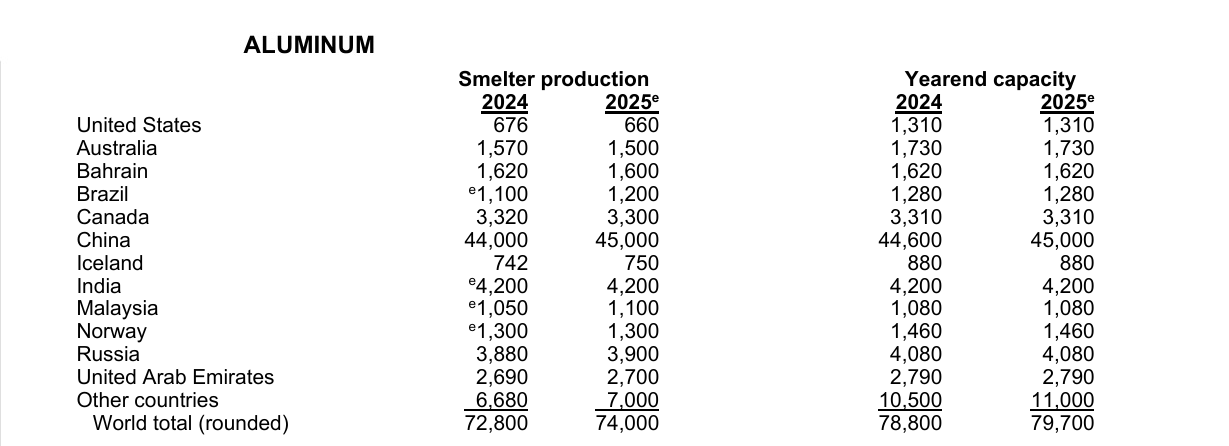
La dernière fiche USGS sur l' Aluminium : https://pubs.usgs.gov/periodicals/mcs20 ... uminum.pdf
Data in thousand metric tons
le post de l' an dernier : http://www.oleocene.org/phpBB3/viewtopi ... 5#p2408345
Data in thousand metric tons
le post de l' an dernier : http://www.oleocene.org/phpBB3/viewtopi ... 5#p2408345
-
energy_isere
- Modérateur
- Messages : 103703
- Inscription : 24 avr. 2005, 21:26
- Localisation : Les JO de 68, c'était la
- Contact :
Re: Aluminium (Alumine et Bauxite)
https://www.miningweekly.com/article/al ... 2026-03-05Aluminium hits highest since 2022 as Alba declares force majeure
5th March 2026 By: Bloomberg
Aluminium prices surged to the highest since 2022 after Aluminium Bahrain suspended deliveries of metal to some customers under so-called force majeure clauses in its supply contracts.
The company, known as Alba, is a major supplier of aluminium in the Middle East, where outbound shipments to customers have been impacted by an effective halt on voyages through the Strait of Hormuz. It confirmed the force majeure on Wednesday, after Bloomberg earlier reported the move.
The Iran war is sending shock waves through the global aluminium industry, with manufacturers facing a spike in prices and traders expecting widespread supply disruptions unless flows through the vital shipping lane resume quickly. Prices rallied as much as 5.1% in London, the most since November 2024.
Aluminium is the most ubiquitous industrial metal after steel, but in recent years the market has been periodically rocked by supply shocks that have exposed fragilities in the complex network of bauxite mines, alumina refineries and aluminum smelters that supply to manufacturers around the world — often in highly specialized forms that can’t readily be replaced.
As the Iran conflict has deepened this week, aluminium traders and investors have been scrambling to game out the short and long-term implications for the market, with some warning privately that the logistical constraints could soon cause widespread declarations of force majeure, which entitle producers to suspend deliveries due to factors outside their control.
Alba said the force majeure relates to the transit issues through the Strait of Hormuz and isn’t due to any disruption or damage to its smelter facility.
For aluminium traders, this week’s effective halt on shipments has already sparked turmoil, and each day of delays causes further complications in consumer markets. Aluminium is used in everything from auto parts and appliances to beverage cans and window frames, and it’s prized by manufacturers for its abundance and low cost relative to competing materials like copper. But even short disruptions can cause commercial havoc for factories who tend to buy it on a just-in-time basis.
While US President Donald Trump said Tuesday that the US Navy will escort oil tankers and other commercial vessels through Hormuz, traders are skeptical that flows through the critical passageway will quickly return to normal. The conflict has exposed another severe supply choke point that could spark chaos across the industry, with manufacturers in Europe, Asia and the US facing shortages in spot supply if Middle East smelters are overcome by disruptions to shipments of outbound metal and incoming raw materials.
Qatar’s state-owned producer has already cut output, while the United Arab Emirates’ top supplier is seeking to draw down stocks from outside the region to avoid disruptions to customers.
With a slew of slower-burning supply challenges already supporting prices — including a regulatory cap on Chinese output, and smelter outages that are impacting Western markets — many traders and investors are betting on much bigger gains for an indispensable metal that’s shaking off a long history of oversupply.
Aluminium rose 4.1% to $3,383.50 a ton as of 12:40 p.m. local time on the London Metal Exchange, extending its weekly gain to almost 8%. All metals were higher, with nickel rallying 2.2% after requests to withdraw inventories from LME warehouses climbed by the most since November.